
For Healthcare Providers
Download this one-page referral guide for treatment indications, referral information, and practice contact details.
Patient Stories
Conservative treatment options for patients whose pain is limiting progress
Most patients improve as expected. Others plateau, struggle to tolerate rehabilitation, or continue to experience pain despite appropriate medical care.
I provide conservative, evidence-informed treatment options for patients who may benefit from additional support alongside their existing medical or rehabilitation plan. My role is not to replace the referring provider. It is to help reduce barriers to recovery, improve function, and communicate clearly so patients can continue moving forward.
My goal is simple: help reduce pain enough that patients can return to progressing with the care you have already recommended.
When a Referral May Be Appropriate
A referral may be appropriate when a patient:
- Has persistent neuropathic or musculoskeletal pain
- Is unable to fully participate in rehabilitation because of pain
- Has plateaued despite appropriate conservative care
- Is seeking non-pharmacologic treatment options
- Has burning, tingling, numbness, or nerve-related pain
- Needs focused treatment to complement an existing plan of care
- Would benefit from an experienced clinician who can evaluate the broader clinical picture
Treatment Options
Scrambler Therapy
Scrambler Therapy is a noninvasive treatment designed for certain forms of chronic neuropathic pain. Surface electrodes are placed on normal skin near the painful area to deliver electrical information intended to alter the way pain signals are processed.
Potential referral considerations include:
- Peripheral neuropathy (including chemotherapy-induced peripheral neuropathy)
- Post-herpetic neuralgia
- Persistent neuropathic pain
- Sciatic or radicular pain with a neuropathic component
- Other appropriate chronic pain presentations
Every patient is carefully screened before treatment. Scrambler Therapy is not appropriate for every diagnosis or every individual. Treatment candidacy also considers emotional and behavioral readiness; when those needs could interfere with safe, consistent participation, appropriate mental-health support—and authorization for care coordination when needed—must be established before treatment begins.
MLS Laser Therapy
MLS Laser Therapy is a noninvasive treatment that uses synchronized wavelengths of light to help reduce inflammation, relieve pain, and support tissue healing.
It may be appropriate for patients with:
- Tendinopathies
- Joint pain
- Soft tissue injuries
- Postoperative pain or swelling
- Arthritis
- Persistent musculoskeletal pain
- Delayed recovery limiting rehabilitation
Laser therapy is used as an adjunct to appropriate medical care and therapeutic exercise, not as a replacement.
Therapeutic & Medical Massage
Therapeutic massage may benefit patients whose pain, muscle guarding, mobility restrictions, or soft tissue dysfunction are interfering with function.
Treatment is clinically focused and individualized and may be appropriate for:
- Persistent muscle tension or guarding
- Myofascial pain
- Restricted mobility
- Headaches or neck pain
- Back or hip pain
- Recovery during rehabilitation
- Patients who require skilled therapeutic treatment rather than relaxation massage
Why Refer Here?
I bring 30 years of clinical experience as both a Physical Therapist and Licensed Massage Therapist. That dual background allows me to evaluate pain and movement from both a rehabilitation and hands-on treatment perspective.
I also completed advanced Scrambler Therapy training in Rome with the technology’s inventor, Professor Giuseppe Marineo, and have pursued additional education in pain science and conservative pain management.
My philosophy is collaboration, not competition.
I am not looking to take over a patient’s care. My role is to address a specific barrier, communicate findings when appropriate and with the patient’s permission, and help patients return to progressing with the treatment plan established by their referring provider.
What Referring Providers Can Expect
- Careful patient screening
- Honest recommendations regarding whether treatment is appropriate
- Clear communication when requested
- A conservative, patient-centered approach
- No exaggerated claims or unrealistic promises
- Respect for your treatment plan and clinical judgment
- Referral back whenever another service or level of care is more appropriate
Referring a Patient
Providers may refer a patient directly or encourage the patient to contact the office for a complimentary consultation.
The consultation provides an opportunity to review the patient’s history, discuss realistic expectations, and determine whether Scrambler Therapy, MLS Laser Therapy, or Therapeutic Massage may be an appropriate addition to their care.
Provider Resource
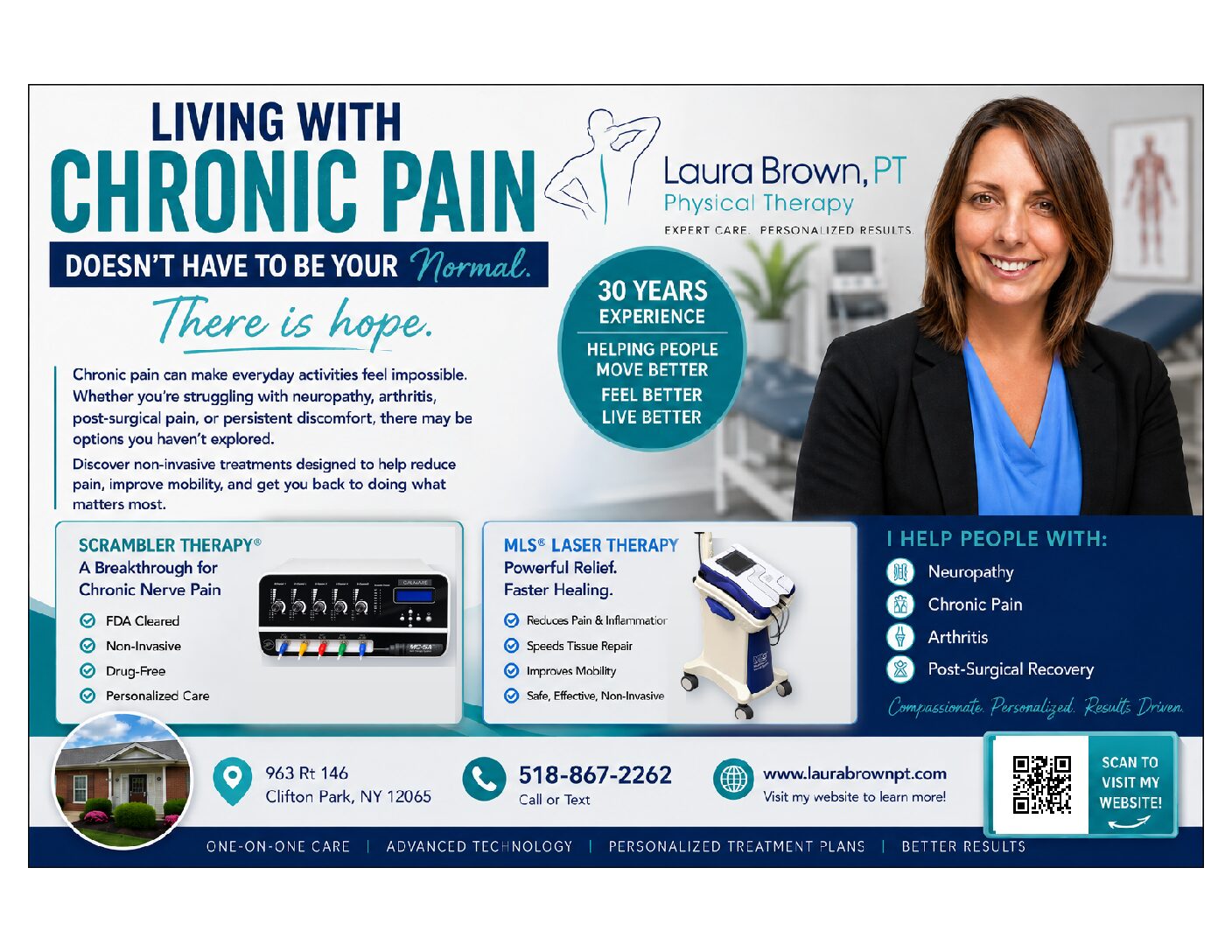
Download & Share Our Patient Information Guide
Have a patient who may benefit from conservative treatment for chronic or persistent pain? Download our patient information guide for an overview of Laura Brown Physical Therapy, Scrambler Therapy, MLS Laser Therapy, and the conditions we commonly help address.
Provider Resource
Download & Share Our Patient Information Guide
Have a patient who may benefit from conservative treatment for chronic or persistent pain? Download our patient information guide for an overview of Laura Brown Physical Therapy, Scrambler Therapy, MLS Laser Therapy, and the conditions we commonly help address.
Download Patient Information Guide (PDF)- 👤 Laura Brown, PT, LMT
- 📞 518-867-2262
- ✉️ info@calmaremassage.com
- 📍 963 Rt 146, Clifton Park, NY 12065